A Tree Problem Gets Worse With Time
Short answer: act early. A tree that looks risky today can look much worse in a week.
Hillarycats Tree Service is a referral service. We connect homeowners in Harrison and the Harrison area with independent tree removal providers. The providers do the work. We help you reach them.
Why hurry? A cracked limb carries weight. Wind adds stress. Wet soil lets roots shift. Snow and ice add more load. Each day gives the problem more to work with.
So take these steps, in this order:
- Stay back from the tree and from any wires.
- Take photos from a safe distance.
- Note what the tree touches: roof, fence, car, driveway.
- Request an estimate.
That is it. You do not need to sort out every detail first. A local provider can look at the job and tell you what it needs.
Prefer to talk it through? Request a callback to check provider availability. Hours vary by provider, so the estimate form is usually the easiest first move.
How It Works
What Hillarycats Tree Service does
We are a matching service. You tell us about the tree. We connect you with a provider in our network who serves your area. That provider contacts you, looks at the job, and gives you a written quote.
We do not climb. We do not cut. We do not set prices. The provider does the work and stands behind it.
The simple path
- Step 1: Send your request. Include the tree size, where it is, and what it touches.
- Step 2: A local provider reviews it and follows up.
- Step 3: You compare the plan and the written quote.
- Step 4: You choose. There is no obligation to hire.
Why the clock matters
Here is the pattern we see described again and again. In the first hours, the danger is the obvious one: a limb or trunk that could fall further. In the first days, rain, wind, and weight work on the weak spot. Over the first week, a damaged tree can drop more wood, pull at roots, or lean toward the house.
The longer a tree sits, the more the job can change. A simple limb cleanup can become a full trunk removal.
What to have ready
Photos help most. So do a few facts: how tall the tree is, whether it is down or still standing, and what it rests on. If a tree touches a power line, stay away and report it to the utility. Do not go near it.
Once a provider has that information, the quote tends to be clearer. You can then decide with facts in hand.
Serving Homeowners Across the Harrison area
Hillarycats Tree Service covers Harrison and the wider the Harrison area. Providers in our network know the local ground.
That matters here. Winters are cold and snowy. Ice builds up on branches, then melts, then builds again. Spring snowmelt leaves soil soft. Coastal storms bring hard wind off the water. Each one stresses trees in a different way.
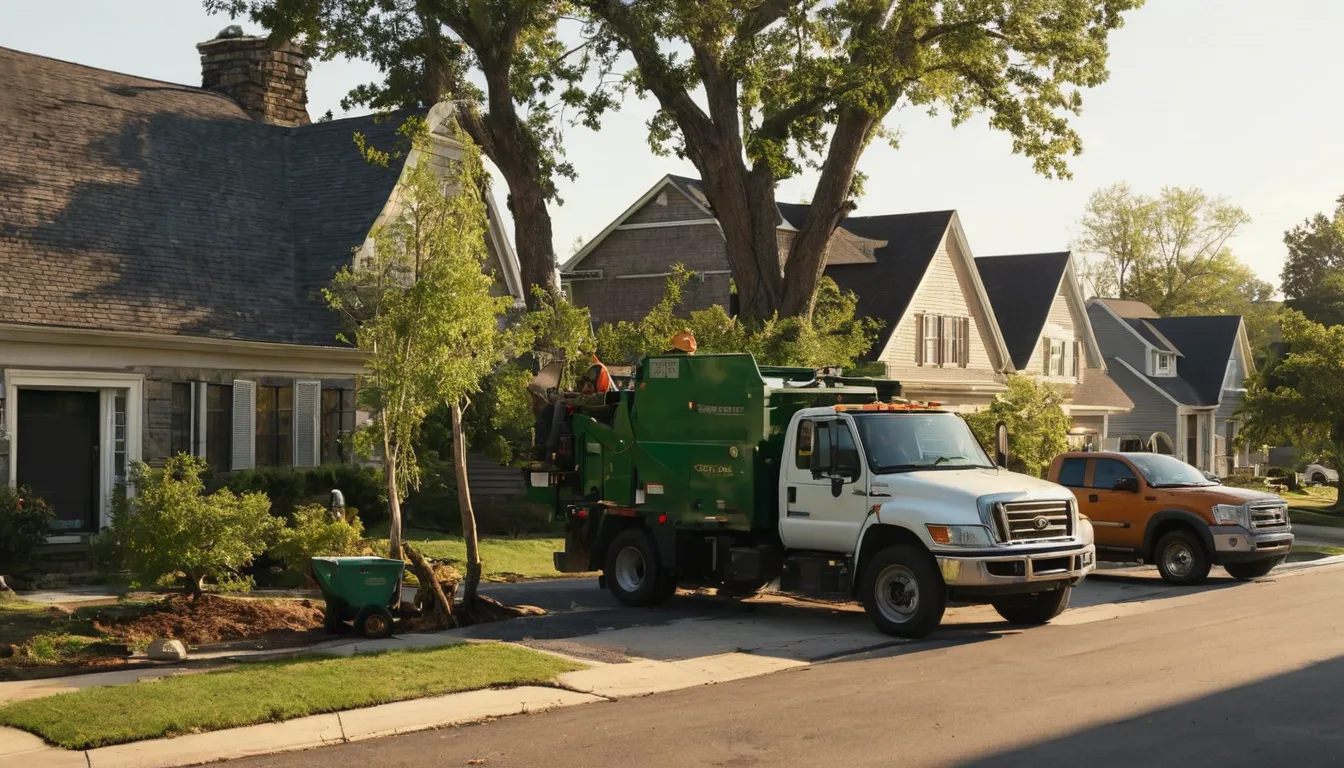
Many homes in NY are older. Lots are tight. Some sit close to stone or block foundations, full basements, and multi-family buildings. Cape Cod style roofs are low, so a falling limb has a short drop. A provider who works in these streets knows how to plan around a house like that.
So what should you do? Start with the form. Tell us the town, the tree, and what it threatens. A local provider can respond with next steps.
Availability changes with the weather. After a big storm, providers get busy. Request a callback to check provider availability, or send your request and let the provider reach you.
We do not set the schedule. The provider does. But a request in the queue is better than a tree you are still worrying about.
What Happens Hour by Hour
The first hour
Stay calm. Move people and pets away from the tree. Keep clear of wires. If anyone is hurt or a line is down, call emergency services first.
Then take photos from a safe spot. That is all you need to do right now.
Hours two through twelve
This is the window to get your request in. Wind, rain, or wet snow can keep loading the tree. A split limb can drop. A leaning trunk can shift further. Many providers can respond quickly, but that depends on the day and the weather.
Day one
If a tree has hit the house, cover openings where you safely can, and keep people out of that area. Photos help with any insurance claim. Some policies may cover sudden damage; check your policy. Providers can often help document damage for a claim.
Days two through seven
Trouble spreads here. Water finds the gap in a damaged roof. Cracked wood dries out and weakens. A tree that stayed up on the first night may not stay up on the fifth. Storm tree clearance is often easier to plan when the pile is smaller and the ground is firm.
Weeks two through four
Broken limbs hanging in a crown become a hazard. Stumps left in place start to rot, draw pests, and trip people. Stump grinding can wait a little, but it should not wait forever.
Winter and thaw
Ice and thaw cycles crack weak wood. Spring snowmelt softens the soil around the roots. After a coastal storm, a tree that survived can still lean. Look again after each one.
What it costs
Typical U.S. prices run from a few hundred dollars for a small job to several thousand for a large or hard-to-reach tree. Emergency work can cost more. Prices vary by job, so get a written quote before work starts.
Request Your Estimate
Ready? Tell us about the tree. Share the town, the size, and what it touches. A local provider in our network can follow up with next steps and a written quote.
If you would rather talk, request a callback to check provider availability. Hours vary by provider. You can also email contact@hillarycats.living with photos and a short note.