Need tree removal in Harrison?
Send a request and tell us about the tree. A local provider in our network can follow up with next steps and a written quote.
No obligation
Request a tree removal estimate
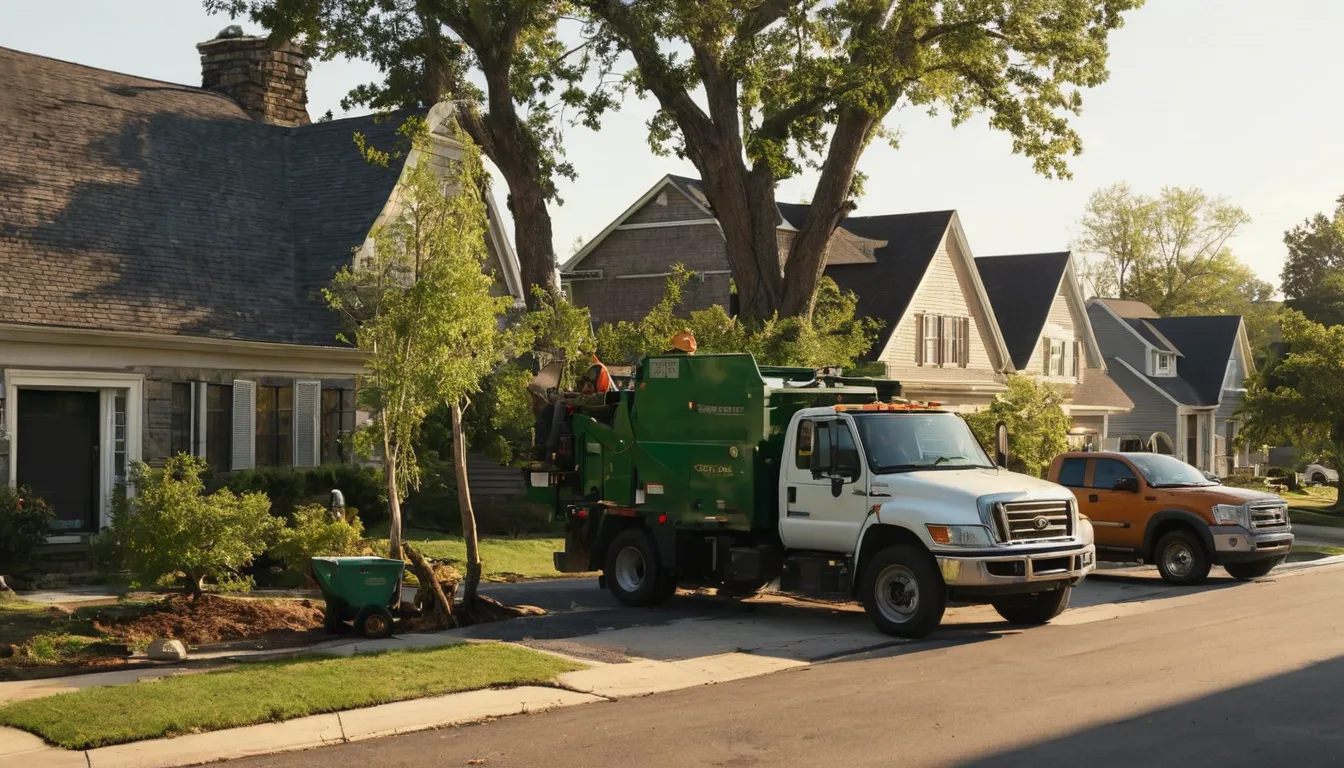
Tree removal is the job of taking a whole tree down safely, in one piece or in sections, and hauling it away. Homeowners ask for it when a tree is dead, leaning, split, or too close to the house. Hillarycats Tree Service does not cut trees. It connects you with independent local providers in the Harrison area who do.
Timing matters more than most people expect. A cracked tree can drop a limb in the next storm. A dead tree gets weaker each season. A tree on a roof lets water in within hours. Request an estimate, compare what providers say, and pick the plan that fits the clock and your budget.
It depends on the tree. A tree on your roof needs help right away. A dying tree in the yard can wait a few weeks. Either way, watch the clock. The longer a problem tree stands, the more it can cost you.
Hillarycats Tree Service is a referral service. It connects you with independent local providers in the Harrison area. The provider does the cutting. You request an estimate and compare.
Step back first. Keep people and pets away from the tree. Treat every wire as live, even if it looks dead. Never touch a tree that is touching a line.
Take photos from a safe spot. Then request an estimate. If a tree is on the house or blocks your driveway, Request a callback to check provider availability.
Wet wood is heavy. Rain and wet snow add pounds to a leaning trunk. A cracked limb can drop with no warning. A tree resting on a roof can shift and push through shingles.
A tarp can keep rain out. Leave the tree itself to a provider. Climbing under a loaded tree is how people get hurt.
A hole in the roof lets water in. In older homes with full basements and stone or block foundations, that water often ends up downstairs. Insulation gets wet. Ceilings stain. Mold can start in a few days.
Keep your photos and notes. Some policies may cover sudden damage, so check your policy. Providers can often help document damage for a claim.
A dead tree does not fix itself. Bark peels. Fungus shows up at the base. Branches drop in light wind. Each season makes it weaker.
Cold winters hurt too. Ice and thaw cycles split weak trunks. Spring snowmelt softens soil, and roots lose their grip. Coastal storms then finish the job. Waiting turns a planned job into a storm job.
The reasons are simple:
If you are unsure, ask a provider to look. An honest look costs less than a bad guess.
The provider visits and checks the tree, the ground and nearby lines. Then comes a plan and a written quote.
With open space, a tree can be felled whole. Near a house, fence or wire, climbers cut it in pieces and lower each one with ropes.
After a storm, providers sort jobs by danger. A tree on a home comes before a tree across a back lawn. Expect some wait when many neighbors need help.
Size is the big one. Access matters next. A tree beside a house or power line takes more time and care. Rot, lean and storm damage add risk. Haul-away adds cost too.
Typical U.S. prices run from a few hundred dollars to a few thousand. Every job differs, so get a written quote.
Some towns ask for a permit for large trees, street trees or trees near wetlands. Rules differ by town, so check with your town office. Many providers know the local rules.
If the tree sits on a lot line or in a multi-family property, talk to the neighbor or owner first.
Ask three things. Do they carry insurance? Is the quote in writing? Does the price include cleanup and haul-away?
Be careful with anyone who wants full payment up front or pushes you to decide on the spot. Compare at least two estimates.
Move cars out of the drive. Clear lawn furniture and toys. Keep pets inside. Tell the provider about buried lines, sprinklers and tight gates. Cape Cod style lots can be narrow, so mention that early.
Walk the yard with the provider. Check the roof, fence and gutters. Decide what to do with the wood: keep it, chip it or haul it. A stump will remain unless you add stump grinding to the job.
If the tree came down in a storm, send your photos to your insurer and keep every paper.
Answer first: request an estimate. Then compare and book.
The provider cuts the tree down whole or in sections, depending on how much open space surrounds it.
Branches, logs and brush can be cleared from your yard. Ask whether this is in the quote.
A provider looks at lean, rot, wires and nearby buildings before any cut is made.
You get a clear price for the work, so you can compare providers before you say yes.
Prices vary by tree size, access, and risk. These are typical U.S. ranges only. Your price may be higher or lower, so always ask each provider for a written quote.
| Job type | Typical range | Notes |
|---|---|---|
| Small tree, under 30 feet | $150 – $600 | Easy access keeps the price low |
| Medium tree, 30 to 60 feet | $500 – $1,500 | Most yard trees land here |
| Large tree, over 60 feet | $1,200 – $3,500 | Height and trunk width add time |
| Tree near house or wires | $800 – $4,000 | Extra rigging and care needed |
| Storm-fallen tree on a structure | $1,000 – $5,000 | Risk and urgency raise the price |
| Haul-away and cleanup | $100 – $500 | Sometimes already in the quote |
Keep people and pets away from the tree and from any wires. Take photos from a safe distance.
Send the form with your tree details, your photos and the date you hope to get it done.
Look at price, scope, cleanup and timing. Ask each provider what is and is not included.
Pick a provider, clear access to the tree, and move cars and loose items out of the way.
A short, plain guide tells you what to do in the first hour of a tree problem.
You are matched with independent providers who work near you in the area.
Request an estimate and see more than one option before you choose.
Asking for an estimate does not lock you in to anything.
Send a request and tell us about the tree. A local provider in our network can follow up with next steps and a written quote.
No obligationMost U.S. jobs run from a few hundred dollars for a small tree to a few thousand for a large or risky one. Size, access and cleanup change the price, so get a written quote.
Sometimes. Many towns have rules for large trees, street trees or trees near wetlands. Check with your town office before the work starts. A local provider can often tell you what usually applies.
You can wait a little if it is far from the house and people. But dead trees get weaker each season and can fall in the next storm. Get an estimate soon and plan the job.
Send a request and tell us about the tree. A local provider in our network can follow up with next steps and a written quote.
No obligation